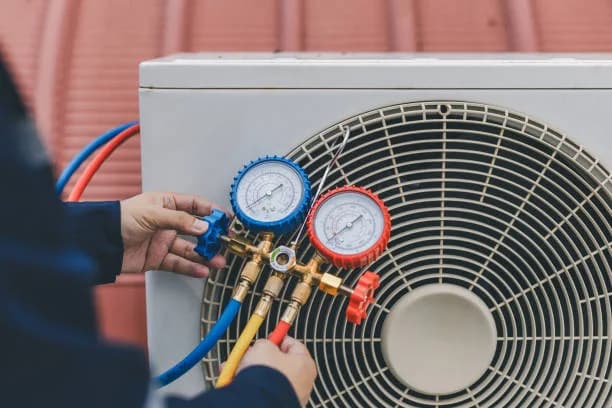
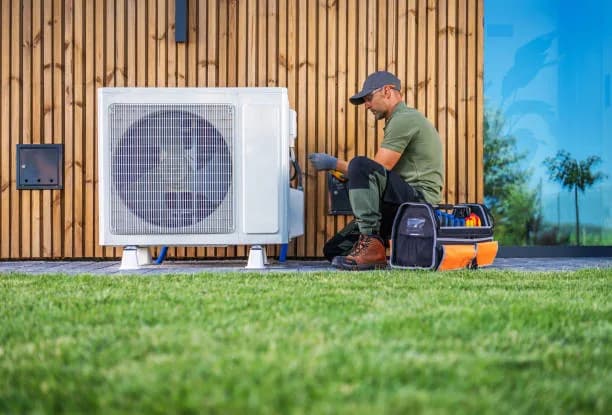
Heat pumps are not right for every house, and anyone who tells you otherwise is selling something. Insulation, existing heating, electrical capacity, and how you want to use the system all matter. We start with a careful look at your home and tell you what a heat pump can honestly do there.
Call or text (781) 353-8852 for a free estimate. We are family owned, A+ rated by the Better Business Bureau, and have been in business for 50 years.
Heat pump or mini-split: what is the difference?
Both use the same refrigerant cycle. The difference is how they deliver the heat.
| Type | How it delivers air | Best for |
|---|---|---|
| Ducted heat pump | Uses your existing or new ductwork and an indoor air handler | Homes with ducts that want one system for heating and cooling |
| Ductless mini-split, single zone | One outdoor unit connected to one wall or ceiling indoor unit | Additions, sunrooms, finished basements, or a bedroom that never gets comfortable |
| Ductless mini-split, multi-zone | One outdoor unit feeds several indoor units in different rooms | Whole houses without ducts, such as older homes with radiators |
| Hybrid system | A heat pump paired with a gas or oil furnace that takes over in the coldest weather | Homes that want lower operating cost most days and a strong backup |
Do heat pumps work in a Massachusetts winter?
Yes, if you choose the right equipment and design the system properly. Cold climate models are engineered to keep delivering heat at low outdoor temperatures. Their capacity falls as it gets colder, so the system must be sized for your coldest design day, and some homes keep an existing furnace or boiler as backup.
The detail that matters is the match between the equipment and the house. A heat pump in a leaky, poorly insulated house will struggle. In a tighter house, it can carry the load for most of the season. We look at how your home is built before we promise anything.
- Cold climate rating. Look at heating capacity at low temperatures, not just the headline efficiency number.
- Defrost cycles. Outdoor units go through brief defrost cycles in winter. That is normal.
- Placement. Mount the outdoor unit above expected snow depth and away from drip lines and drifting.
- Backup heat. Existing boilers and furnaces can serve as a backup, which is a practical choice in many South Shore houses.
Our guide to heat pumps and furnaces in Massachusetts goes further into the decision.
How we plan a mini-split installation
- 1Room by room walkthroughWe look at each space you want conditioned, the layout, and how you use it.
- 2Load calculationWe size each indoor unit and the outdoor unit for the actual heat loss and gain.
- 3Placement planWe choose indoor unit locations for good airflow and a clean look, and the outdoor unit location for service access and snow.
- 4InstallWe mount the units, run the refrigerant lines, condensate drain, and power and control wiring. Wall penetrations are sealed.
- 5CommissionWe vacuum the lines, charge the system as specified, and test heating and cooling modes.
- 6Show you how to use itYou get a walkthrough of the remote, the modes, and the filter cleaning.
Rebates and incentives
Mass Save and other programs may have incentives available for qualifying heat pump installations. Programs, eligibility, and amounts change, so we do not quote specific numbers here. Check the official Mass Save website for the current rules, and read our rebate guide for how the process usually works. Ask us about incentives when we visit and we will tell you what we know about the paperwork.
Why choose Home Heating and Cooling
We have installed heating and cooling in South Shore homes for 50 years, so we treat heat pumps as one tool among several instead of a trend to chase. Sometimes a heat pump is the best answer. Sometimes a high efficiency boiler or furnace with added cooling is. You get that judgment from a family owned company that will still be here after the install.
We are rated A+ by the Better Business Bureau and open 24 hours a day, 7 days a week. Questions after the install get answered by the people who did the work.
- A+ rated
- Better Business Bureau
- 50 years
- in business
- Family owned
- and operated
- Open 24 hours
- 7 days a week
Where we provide heat pumps and mini-splits
We serve homeowners across Plymouth County from our office in Norwell. These are some of the towns we visit most often. Every town page explains what is different about heating and cooling there.
- Rockland, MA
- Norwell, MA
- Hanover, MA
- Abington, MA
- Hingham, MA
- Whitman, MA
- Hanson, MA
- Pembroke, MA
- Scituate, MA
- Brockton, MA
- Hull, MA
- Marshfield, MA
Heat Pumps and Mini-Splits: common questions
Can a heat pump be my only heat source in Massachusetts?
In some well-insulated homes with a properly sized cold climate system, yes. In others, we recommend keeping a furnace or boiler as backup. We will tell you which applies to your house.
Do mini-splits need ductwork?
No. They connect to each room with a small refrigerant line and electrical wiring, which is why they are a common choice for older homes with radiators.
How many indoor units will I need?
That depends on the layout and how you live. An open floor plan may need fewer units, and a house with many closed rooms needs more. We plan it room by room.
Will a heat pump lower my energy bill?
It can, especially compared with electric resistance heat, oil, or propane, but results depend on your rates and house. We discuss realistic expectations instead of promising savings.
Is a heat pump loud?
Modern units are quiet inside and fairly quiet outside. We place the outdoor unit with bedrooms and neighbors in mind.
Do you service heat pumps you did not install?
Yes. See our air conditioning repair and maintenance pages.