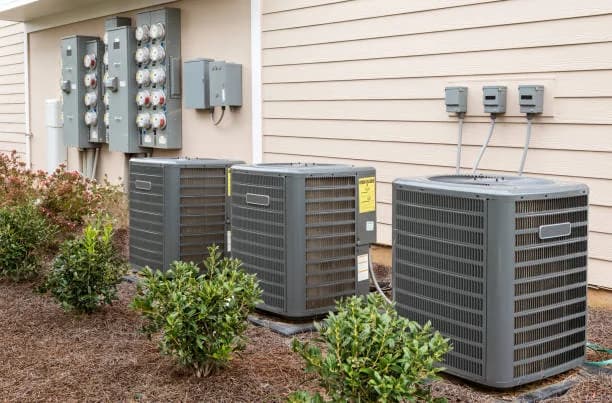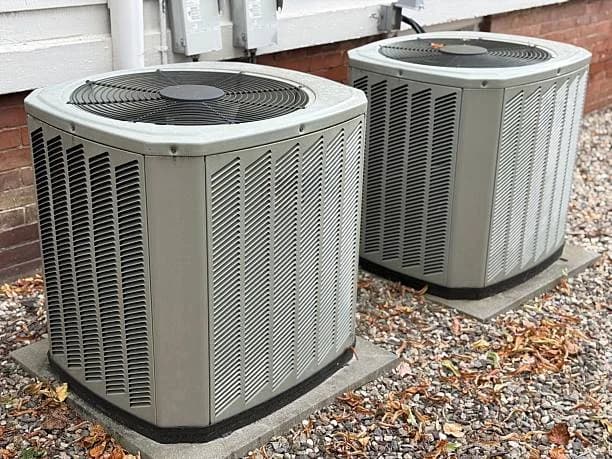
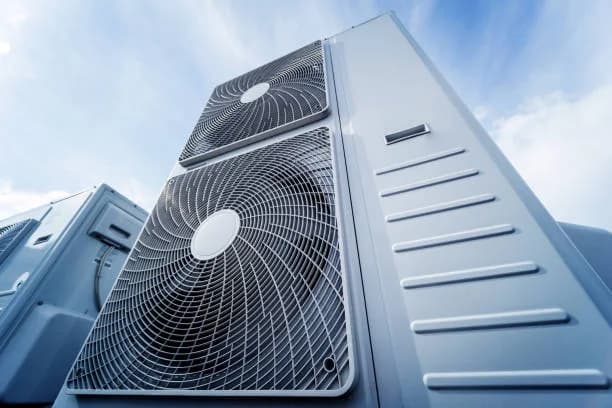
Central air works through ducts, so the first question is whether your house has them and whether they are in good shape. If it does, a central system is often the most comfortable and least obtrusive way to cool every room. If it does not, we will explain the alternatives so you are not pushed into a project that does not fit.
Call or text (781) 353-8852 for a free estimate. We are family owned, A+ rated by the Better Business Bureau, and have been in business for 50 years.
Is central air right for your house?
You already have a forced air furnace
The ducts are in place, and a new coil and outdoor condenser can often be added to the existing air handler. This is the simplest route.
Your ducts are in poor shape
Leaky or undersized ducts will limit any system. We check duct condition before we quote, and we tell you what needs to change.
Your house has radiators or baseboard heat
There are no ducts to use. Running new ducts is possible in some homes, and a ductless system is often easier. See heat pumps and ductless mini-splits.
You want to cool the whole house evenly
Central air does this well when the ducts are balanced and the system is sized right.
Your current AC is failing
Older systems lose capacity, run louder, and often use refrigerant that is no longer made. Replacement can be the more economical choice.
You want both heating and cooling from one system
A ducted heat pump can heat and cool, and may be the right alternative to a furnace and AC pair.
Why sizing matters more than the brand name
The most common mistake in air conditioning is installing a unit that is too big. It seems like more capacity should be better, but an oversized system cools the air quickly, shuts off, and never runs long enough to pull humidity out. You end up with a house that is cold and clammy at the same time, and a system that starts and stops all day.
We size a system by calculating how much heat your house gains in summer, which depends on insulation, windows, orientation, the number of people living there, and the layout. Then we match the equipment to that number. When the system is the right size, it runs in long, steady cycles that keep temperatures even and humidity under control, and it lasts longer.
Central AC system choices
| Option | How it works | Best for |
|---|---|---|
| Single-stage | Runs at full capacity until the house reaches the set temperature | Lower budgets and smaller homes with simple needs |
| Two-stage | Runs at lower capacity most of the time, with a high setting for the hottest days | Homeowners who want better comfort and humidity control without the highest price |
| Variable speed (inverter) | Adjusts output in small steps to match the load | Homes that want the quietest, most even cooling and the best efficiency |
| Ducted heat pump | Provides cooling in summer and heating in winter through the same ducts | Households replacing both furnace and AC, or aiming to reduce fossil fuel use |
Efficiency is rated by SEER2. A higher number means less electricity for the same cooling, and the right level depends on how many hours your system will actually run. In a New England summer that is fewer hours than in warmer regions, so the most efficient model is not always the best value. We help you weigh that.
What the installation involves
- 1Home assessmentWe measure the house, inspect the ducts and air handler, and check the electrical service.
- 2Load calculation and optionsYou get a recommended system and alternatives, with a written quote.
- 3Indoor workWe install the evaporator coil, drain line, and any duct modifications, and connect the line set.
- 4Outdoor workWe set the condenser on a level pad in a spot that allows airflow and keeps it clear of snow and drainage problems.
- 5Electrical and controlsWe run the wiring, disconnect, and thermostat connections to code.
- 6Evacuate, charge, and testWe evacuate the lines, charge the system to the manufacturer specifications, and check airflow and temperature drop.
- 7WalkthroughWe show you the thermostat, the filter, and what normal looks like, so you know what to expect.
What shapes the price of central air
Price depends on whether ducts exist, how much of the house they reach, the efficiency and staging of the equipment, and how easy the install is. Adding central air to a house with a good furnace and ducts is a very different project from adding it to a house that needs new duct runs. Read more in our guide to central air conditioning costs and options in Massachusetts, which labels all numbers as estimates and explains what moves them.
Some qualifying equipment may be eligible for incentives. Check current terms with Mass Save and other programs before you commit.
Why choose Home Heating and Cooling
We install central air for homes that range from 1950s ranches in Hanover to big shingled houses on the water in Scituate and Duxbury. After 50 years, we know that a good installation has little to do with the logo on the condenser. It is about sizing, duct work, and a careful commissioning process that most homeowners never see.
We are a family owned business with an A+ rating from the Better Business Bureau. You get a clear quote, a tidy install, and a company that stays reachable. We are open 24 hours a day, 7 days a week.
- A+ rated
- Better Business Bureau
- 50 years
- in business
- Family owned
- and operated
- Open 24 hours
- 7 days a week
Where we provide central air conditioning
We serve homeowners across Plymouth County from our office in Norwell. These are some of the towns we visit most often. Every town page explains what is different about heating and cooling there.
- Rockland, MA
- Norwell, MA
- Hanover, MA
- Abington, MA
- Hingham, MA
- Whitman, MA
- Hanson, MA
- Pembroke, MA
- Scituate, MA
- Brockton, MA
- Hull, MA
- Marshfield, MA
Central Air Conditioning: common questions
Can I add central air if I only have a furnace?
Usually, yes. If the existing ducts are in decent shape, we add an evaporator coil and an outdoor condenser. We will check that the furnace blower and ducts can handle the airflow cooling needs.
How long does central AC last?
Many systems last 12 to 17 years or more when installed well and maintained each year. Coastal salt air can shorten the life of outdoor coils, so we pay attention to placement near the water.
Will central air make my house too dry or too humid?
A properly sized system removes humidity while it cools. An oversized one does not run long enough to do so. Sizing is the key to a comfortable result.
How loud is a new central AC?
Modern condensers are much quieter than older ones, and variable speed models are quieter still. We also place the outdoor unit with your bedrooms and your neighbors in mind.
Can you install it in a house with radiators?
We can discuss it. Ducts may be added in some houses, but many homeowners find a ductless mini-split is the cleaner solution. We will explain both honestly.
Do you offer repairs on the AC you install?
Yes, and on other makes too. See our air conditioning repair service, available 24 hours a day.